
TRAIL GUIDE: Lean Not On Your Own Understanding
 The “Trail Guide” devotional is used by our adult leaders of grade school groups in Quest as a way to prepare their hearts and minds for the topics we will be covering with the children on the weekend. We have made them available here to help our parents of grade-schoolers engage with their children around the topics we are discussing and also for anyone else that might be blessed by following along.
SOUL SHERPA, LESSON 2: The Holy Spirit is Our Guide
My mother is infamous for her sense of direction. Or should I say, lack thereof. She once followed a car for some distance out of her way because “they looked like they knew where they were going.” She has driven almost out of state before realizing she had taken a wrong turn. Mom was sure she was going in the right direction. She even thought she had recognized some landmarks. It took some time but Mom has learned to lean not on her own understanding when it comes to directions. Nowadays she makes sure she either rides with or follows someone who knows the right path.
How many times have you headed down a path that you were sure was right and wise only to find out that you were on a road to heartache? When we depend on our human discernment and worldly understanding they will fail us in the end. “There is a way that seems right to a man, but in the end it leads to death.” (Proverbs 14:12)
We can contrast two great men of scripture in this regard. Saul, the first anointed King over Israel, when pressed, did what he discerned to be the wise thing when Samuel was delayed and an attack seemed imminent. He took it upon himself to sacrifice to the Lord. It might seem to us, on the face of it, to be an intelligent move. Samuel hadn’t shown up on time, they were in great danger, and they needed God’s favor. But Saul had been told to wait. He did not inquire of the Lord and he did not trust the command he had been given by the man of God. He was leaning on his own understanding. By contrast his successor, King David, inquired of the Lord for almost every big decision he made, with the exception of a few that famously went badly for him. God has given us a trustworthy spiritual GPS system; his Word and his indwelling Holy Spirit, ever present to guide us. Inquire of the Lord and He will make your paths straight. He is our trustworthy teacher and guide. This is a promise of God.
Where is the wise person? Where is the teacher of the law? Where is the philosopher of this age? Has not God made foolish the wisdom of the world? – 1 Corinthians 1:20
“Trust and obey, for there’s no other way, to be happy in Jesus, but to trust and obey.” -Traditional Hymn
MEDITATING ON THE WORD:
Proverbs 14:12
1 Corinthians 1:20
1 Samuel 13
1 Samuel 23:4
TRAIL GUIDE: Spiritual GPS
The “Trail Guide” devotional is used by our adult leaders of grade school groups in Quest as a way to prepare their hearts and minds for the topics we will be covering with the children on the weekend. We have made them available here to help our parents of grade-schoolers engage with their children around the topics we are discussing and also for anyone else that might be blessed by following along.
SOUL SHERPA, LESSON 1: The Holy Spirit is Our Guide
The work of the Holy Spirit is to manifest (make known, show) the active presence of God in the world and especially in the church.
Isn’t GPS a great thing? It amazes me that a satellite high above the earth can see me, and when combined with digital mapping software, can tell me how to get from point A to B in the quickest way possible. It amazes me even more to consider that this system can see if there is heavy traffic or an accident along my route and re-direct me around it. If I take a wrong turn it quickly notifies me. “Rerouting.” But as amazing as this system is, it is only as good as its underlying data. How many times have you followed your GPS directions only to find out that its map data is incorrect and you are at a dead end or the address data is incomplete and you end up in a business park when you wanted to be at a friend’s house? Even when the data is good, it isn’t foolproof. An overcast day or poor cell coverage can knock your GPS out completely.
But there is a guidance system that is 100% trustworthy, 100% of the time. Its data is perfectly reliable. It works no matter how dark it gets because to it, “darkness is as light.” It is an integrated system that lights your path, turns your darkness to light, guides you on the best path possible, reroutes you when you make a wrong turn, and even provides roadside assistance when you break down along the highways of life. That is our triune God. God’s living Word, breathed out by the Father through the Son is its database. It is empowered by his Holy Spirit whose job it is to make known the active presence of God in the world and especially in his children by guiding us into all truth. Our students need to learn early that they can depend, with ALL their hearts, on their fail-safe guidance system.
“I will lead the blind by ways they have not known, along unfamiliar paths I will guide them; I will turn the darkness into light before them and make the rough places smooth. These are the things I will do; I will not forsake them.” (Isaiah 42:16)
“Guide me in Your truth and teach me…” -Psalm 25:5a
MEDITATING ON THE WORD:
Proverbs 3:5-6
Isaiah 42:16
John 8:12
Psalm 119:105
Psalm 23:1-3
TRAIL GUIDE: Imitate God
The “Trail Guide” devotional is used by our adult leaders of grade school groups in Quest as a way to prepare their hearts and minds for the topics we will be covering with the children on the weekend. We have made them available here to help our parents of grade-schoolers engage with their children around the topics we are discussing and also for anyone else that might be blessed by following along.
SPOTTER, LESSON 3: God is Faithful to Forgive
“Be imitators of GOD, therefore, as dearly loved children” Ephesians 5:1 (emphasis added) The Bible makes plain that, when we are reborn in Christ, we are called to be “imitators of GOD,” that is, imitators of his communicable character attributes, those attributes GOD “shares” with his adopted children. We can know the character of our GOD because it is clearly revealed in scripture. Among his many qualities we find that God is loving, patient, kind, good, joyful, faithful, righteous, generous, courageous, creative, and, not least of all, forgiving. These are traits we should strive to imitate.
“Be kind and compassionate to one another, forgiving each other, just as in Christ God forgave you.” (Ephesians 4:32) Forgiveness is sweet and grace is a great virtue when we are on the receiving end. It is something to rejoice over. But how things change when we are the “offended” party. Suddenly justice takes center stage and we begin to entertain thoughts about whether the offender “deserves” our forgiveness. We focus on our wounds and wallow in our injuries. We think that the kind of forgiveness Jesus offered his enemies on the cross, “Forgive them for they know not what they do,” is impossible for us to imitate. After all He is God. But this excuse falls apart when we look a few pages further on into the book of Acts and we see Stephen imitating his Lord in the face of a brutal death by stoning. “Lord, do not hold this sin against them!” Can we hope to attain to this level of forgiveness? I’ll let Jesus answer that one. “Ask and it will be given to you; seek and you will find; knock and the door will be opened to you.” With God’s indwelling Holy Spirit all things are possible.
As we close out this section on forgiveness, we should seek to help the children understand that on this side of heaven, we are striving to imitate Christ, knowing we will stumble and fall, trusting in his forgiveness when we do, and letting Him pick us up and urge us on to continue the climb He has called us to.
“Not that I have already obtained all this, or have already arrived at my goal, but I press on to take hold of that for which Christ Jesus took hold of me. Brothers and sisters, I do not consider myself yet to have taken hold of it. But one thing I do: Forgetting what is behind and straining toward what is ahead, I press on toward the goal to win the prize for which God has called me heavenward in Christ Jesus.” Phil.3-12-14
“Help me now to do the impossible:
Forgiveness.” -Matthew WestMEDITATING ON THE WORD:
Ephesians 4:32, 5:1
Matthew 6:8-14
Matthew 18: 21-35
Phil.3-12-14
TRAIL GUIDE: Paid In Full
The “Trail Guide” devotional is used by our adult leaders of grade school groups in Quest as a way to prepare their hearts and minds for the topics we will be covering with the children on the weekend. We have made them available here to help our parents of grade-schoolers engage with their children around the topics we are discussing and also for anyone else that might be blessed by following along.
SPOTTER, LESSON 3: God is Faithful to Forgive
Propitiation (Greek – hilasmos, meaning an offering to appease an offended party.)
How can a God who hates sin so much just let it go unpunished? When He looks at His creation and sees how scarred and polluted sin has made it, He is greatly offended. How can He not pour out his anger on the guilty? How can God let wrongdoers go free? It doesn’t seem fair. Unless, of course, I am the wrongdoer and then my math changes dramatically, and forgiveness seems a rather wonderful thing. But the questions are still valid. How is it just to leave sin unpunished?
The short answer is, it wouldn’t be just, if that is what God actually did. But sin has been punished. The sins of God’s people going all the way back to Adam accumulated and accumulated. All the while God in his great mercy withheld punishment, looking forward to a day when One would pay for it all and wipe out the debt once and for all for those who believed in his coming. “God presented Christ as a sacrifice of atonement, through the shedding of his blood—to be received by faith. He did this to demonstrate his righteousness, because in his forbearance He had left the sins committed beforehand unpunished.” (Romans 3:25)
The best news is that, not only did Jesus receive the just wages of the sins of all who went before Him, He also made available that credit of righteousness to all who would believe and receive Him in faith in the future. He became our Passover Lamb. The Lamb was slain, that work is done. It is a historical fact that happened completely outside of us and was purely an act of God. The only question that matters now is have you, by faith, applied the blood of the Lamb to the doorposts of your life? Have your students?
“Jesus paid it all
All to Him I owe
Sin had left a crimson stain
He washed it white as snow”
(Elvina Hall, Jesus Paid It All)
“What can wash away my sin? Nothing but the blood of Jesus.” -Robery Lowry, Nothing But the Blood
MEDITATING ON THE WORD:
Romans 3
Psalm 86:5
Ephesians 1:7
Hebrews 10:12, 17
Update: Daddy-Daughter Dance
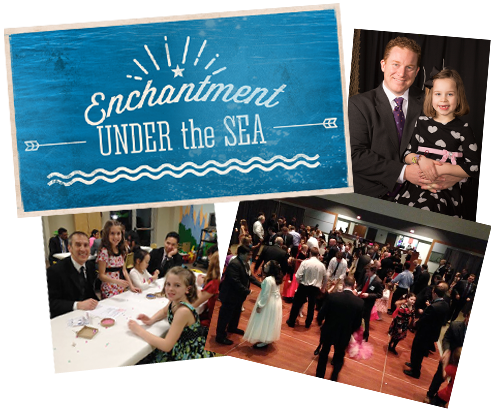 It’s a very special night, the Daddy Daughter Valentine’s Dance. RBC is transformed into a magical place where little girls and their Daddies create lifelong memories. For the past five years, I have helped my daughter prepare for this much-anticipated event. We shop for dresses, try on shoes, curl hair and paint nails. She comes down the staircase and joins her Daddy for a quick photo shoot, and then off they go. This year, however, my daughter was past the age of being able to attend so she asked if she could serve. As we left for the dance, my husband said goodbye in a difficult moment where we gave each other that “she’s-growing-up-too-fast” look.
The theme of this year’s dance was Enchantment Under the Sea. A treasure map led Dads and Daughters through an undersea world with something special to encounter at every turn, including seafaring crafts, treats, and decorations and plenty of dancing.But the most wonderful thing about the evening was watching the interactions. I did not see Dads absorbed in conversations with one other or checking their phones or watches. Rather, I saw dapper Dads proudly hoisting their girls into their laps for a picture. I saw Dads elbow-deep in glitter creating pretty crafts. I saw Dads enjoying ice cream sundaes and clam cookies complete with a candy “pearl.” I saw a sea of Dads on the dance floor clapping to the chicken dance and cradling their girls in their arms to songs that remind them how precious and short the time is. It was a beautiful night.
Amid the enchantment, I saw little girls whose self-esteem soared. Little girls who felt so loved as their Dad fully engaged with them and entered into their world. Little girls who looked up to their Dads proudly. Bravo to all of you Dads who came and gave the gift of making your daughters feel like the most special little girls on the earth (or under the sea.)
– Vickie Wennemark, Family Ministry Assistant
TRAIL GUIDE: Something Stinks
The “Trail Guide” devotional is used by our adult leaders of grade school groups in Quest as a way to prepare their hearts and minds for the topics we will be covering with the children on the weekend. We have made them available here to help our parents of grade-schoolers engage with their children around the topics we are discussing and also for anyone else that might be blessed by following along.
SPOTTER, LESSON 2: God is Faithful to Forgive
Ben Franklin is quoted as saying, “Guests, like fish, begin to smell after three days.” I think the same thing could be said about sin. If we attempt to hide sin, to cover it up, to “regard” it in our hearts, it is only a matter of time before it will begin to stink up the place. Numbers 32:23 tells us that we can be sure that our “sin will be discovered. It will be brought out into the open.” In Hebrews 4:13 we are reminded that “Nothing God created is hidden from Him. His eyes see everything. He will hold us accountable for everything we do.”
So how does sin begin to stink? King David, the subject of our case study, gives us detailed insight into the very real physical effects of un-confessed sin in the life of a believer. When I kept silent, my bones wasted away through my groaning all day long. For day and night your hand was heavy on me; my strength was sapped as in the heat of summer. (Psalm 32:3-4)
Only when David, after being confronted by Nathan, recognizes his sin for what it is and despises it as God does, does he find forgiveness. Then I admitted my sin to you. I didn’t cover up the wrong I had done. I said, “I will admit my lawless acts to the Lord.” And you forgave the guilt of my sin. (Psalm 32:5)
Belonging to Christ involves a change of mind, the adoption of a new worldview in which sin is seen through the eyes of God for what it is. Confession begins with seeing and hating our sin. Don’t let sin be a guest in your house.
“Guests, like fish, begin to smell after three days.” -Ben Franklin
MEDITATING ON THE WORD:
Psalm 32:3-5, 38:18, 139:23-24
Numbers 32:23
Proverbs 28:13
TRAIL GUIDE: Confession
The “Trail Guide” devotional is used by our adult leaders of grade school groups in Quest as a way to prepare their hearts and minds for the topics we will be covering with the children on the weekend. We have made them available here to help our parents of grade-schoolers engage with their children around the topics we are discussing and also for anyone else that might be blessed by following along.
SPOTTER, LESSON 1: God is Faithful to Forgive
Confess (v): “to say the same thing about” (Greek – homologéō) “to make known, declare, tell.” (Hebrew – Yada)
To confess a sin is to uncover it and call it exactly what God calls it. Effective confession must be accompanied by the willingness and desire to turn away from it. Having a “change of mind” about the sin (repentance).
The pattern we see with King David in his sin against God with Bathsheba, the murder of Uriah, the attempt at hiding those sins, the physical results of that attempt, and his subsequent confession in Psalm 51, serves as a case study for God’s promise of forgiveness.
Over the next several weeks, we will walk with our students through the hard truth that even David, a “man after God’s own heart,” failed the test and sinned against heaven. Were it not for God’s promise of forgiveness, this reality could cause us to lose all hope of ever being useful in the hands of our Lord. But the truth is that our God is faithful to forgive for the sake of his own Name and because He is, we can say to God, just as David did, “Let me hear you say, “Your sins are forgiven.” (Psalm 51:8)
“He will do it through Jesus Christ our Lord.” -Romans 7:25a
MEDITATING ON THE WORD:
1 John 1:5-10
Romans 7:7-25
Psalm 51
Daddy Daughter Valentine Dance

 Each year, the Daddy Daughter Dance steps fully into the spotlight for 120 girls and their dads who enjoy a night brimming with classy dress, sweet treats, and crafts galore. It’s a special break away from sweatpants and homework helpers towards a focus on relationship. Hear what we heard after the Dance in 2013 and consider this opportunity to join us.
Awesome job and awesome event! Literally the best event and time Savannah and I have shared together. In asking her for her favorite part, her response was, “All of it!” – Chad Baker (Dad)
You guys rock. Awesome event, as always; this was the best one yet, which is hard to believe because past years were awesome too. – Jeff Henshaw (Dad)
Thank you for putting so much effort into this event. The Dance is so special for the Fathers and daughters. Memories being created that are priceless and will last forever. – Leta Hershey (Craft Volunteer)
One of the most memorable nights I have ever had with my oldest daughter. – Anonymous Dad
This year’s Dance – themed Enchantment Under the Sea – will take place on Saturday, February 8 from 6:00 to 9:00 p.m. The evening will be filled with a dinner date with dad, games, arts and crafts, yummy dessert, a photo with your daughter, and of course dancing!
The Dance is open to any young lady between 1st and 5th grade. Space is limited – so be sure to register early! Get information and register at www.restonbible.org/valentine.
TRAIL GUIDE: God’s Word is Our Strength
The “Trail Guide” devotional is used by our adult leaders of grade school groups in Quest as a way to prepare their hearts and minds for the topics we will be covering with the children on the weekend. We have made them available here to help our parents of grade-schoolers engage with their children around the topics we are discussing and also for anyone else that might be blessed by following along.
FREE CLIMBING, LESSON 4: Victory Over Sin
“It’s an open-book test.” Those words can indeed be beautiful to hear in the face of a difficult exam. I remember clearly the first time I heard them in a high school chemistry class. At once, my heart jumped because I had not studied well for the test. In fact, I hadn’t studied well for the whole year in that class. I thought, “This is a gift!” Sadly, my joy turned to nervous sweat as I frantically thumbed pages and scoured the index of a book I had barely cracked all semester. I quickly learned that, without a good working knowledge of the book, an open-book test isn’t much easier at all. I needed the answers now and there just wasn’t time to find them because I didn’t know where to look.
The temptations or tests that we face in our spiritual lives are “open-book” tests too. “Your Word is like a lamp that shows me the way. It is like a light that guides me.” “How can a young person keep his life pure? By living in keeping with your Word.” The psalmist says that the one who meditates on the Word day and night is “blessed.” When Jesus was tempted in the desert after forty days without food, his weapon of choice against the Devil was the Word. “It is written…” Jesus answered three times and Satan retreated. When Satan distorted the words of God, Jesus knew how to answer him. What if Jesus had, like Adam and Eve, simply listened to Satan’s lies and had no response? Rather than being hyper-vigilant and sheltering our children, we must exhort them to be prepared for what WILL come. And when they are tempted they will be able to say, “I have hidden your Word in my heart so that I won’t sin against you.” It’s an open book test. Know the book.
“How can a young person keep his life pure? By living in keeping with your word.”
“I have hidden your word in my heart so that I won’t sin against you.” (Psalm 119:9,11)
“So obey God. Stand up to the devil. He will run away from you.” -James 4:7
MEDITATING ON THE WORD:
Psalm 119:9,11
1 John 5:4-5
Matthew 6:9,13
James 4:7
TRAIL GUIDE: God is Faithful
The “Trail Guide” devotional is used by our adult leaders of grade school groups in Quest as a way to prepare their hearts and minds for the topics we will be covering with the children on the weekend. We have made them available here to help our parents of grade-schoolers engage with their children around the topics we are discussing and also for anyone else that might be blessed by following along.
FREE CLIMBING, LESSON 3: Victory Over Sin
If he could do it, it would be a personal best. 305 pounds. He had trained at slightly lighter weights and thought he could chest press that much one time, but now, looking up from the bench at all that weight, his confidence was slipping. He was about to get up from the bench and leave it for another day when a human mountain, an offensive lineman, who he had seen press this weight multiple times, stepped up to the bar and said, “Do you need a spot? Come on – you got this.”
Our faith may fail. But God’s faithfulness never will. What does it mean to say God is faithful? Is it merely the textbook definition of faithfulness in human terms? Let us hope not. Faithfulness for a finite, limited creature is still, in the end, only wishful thinking or a good intention. The fulfillment of man’s promises, even a very good man, is limited by his humanity. Faithfulness for Almighty God is not only a good intention but a FACT, a reality which can be depended upon without reservation or doubt. When God makes a promise, there is no possible situation in which He would not be able to fulfill that promise. There are no extenuating circumstances capable of keeping God from fulfilling his faithfulness. It is His character.
The reality of God’s faithfulness becomes ever so important when we are tried, tested, or tempted. God allows testing and trials in our lives, just as He allowed Job to be tested, just as He allowed Peter to be tested. This testing is often a means to our spiritual growth. Just as a muscle will atrophy if it is not used and grow when it is pushed up to the edge of what it can bear, so it is with our faith. Faith that is never tested will never grow. God knows how much you can bear and has promised to never allow you to be tested beyond that. He will be your strength to stand up under it. He is standing with you saying, “I’m here. Come on – you got this.”
But the Lord is faithful, and he will strengthen you and protect you from the evil one. -2 Thessalonians 3:3
MEDITATING ON THE WORD:
2 Thessalonians 3:3
Hebrews 4:14-16
Isaiah 41:10
Luke 22:31-32